

How To Say Bruh In Korean
If you want to add some Korean slang to your conversations, then you've come to the right place! This guide is filled to the skirt with awesome phrases and cool words in Korean that are going to level up your Korean communication skills in no fourth dimension flat.

You can get a copy of these slang words in the FREE PDF beneath:
This post list is a mix of dissimilar words and expressions used by native Koreans. From Korean internet slang to funny Korean words, we'll give you a breakdown of the slang words you tin plug into various situations. And so permit's get to it!
Contents
- 1 "Slang" in Korean
- ii What is Korean Slang?
- iii Korean Slang Words
- 3.ane Modernistic Korean Slang
- 3.2 Absurd Korean Words and Expressions
"Slang" in Korean
Let's start by learning how to say "slang" in Korean. You tin can either say 속어 (sogeo) or 은어 (euneo).
What is Korean Slang?
Korean slang is a group of words, phrases, or expressions used by Koreans in everyday conversations. They are usually informal and are used by many in written or oral conversations.
Learning Korean slang is a bully style to improve your Korean skills. Not merely is it going to help with your listening abilities, but you'll be able to audio more similar a local when you speak Korean.
Korean friends volition become closer, funny Korean jokes volition be easier to understand (and laugh forth to), and you'll exist able to follow Korean movies and songs ameliorate. It's likewise a great way to become more than familiar with Korean culture or sympathize more on your adjacent trip to Southward Korea.
Non bad for only learning a few phrases and words!
Korean Slang Words
Let'due south go to the good stuff! We'll at present be giving your examples of Korean slang words. These are words that are used in regular conversations by everyday Koreans. Some are unmarried Korean slang words, while others are expressions that you can use every bit total sentences. Since a lot of these phrases are colloquial, it's good to be familiar with bones Korean phrases equally well.
Below each Korean slang term, nosotros'll give you a breakdown of what they mean in the Korean language, an explanation, the verbs, and the words included so you can sympathize what the word ways exactly.
Selection your favorites, make certain you lot sympathize the meaning, and effort them out with your Korean friends. You're well-nigh certain to see some surprised looks, every bit well as hear "where did you learn that?!" It's a actually fun way to supplement your regular Korean learning.
Some alert: the slang in this article is in Hangul, the Korean alphabet. If you lot can't read the Hangul yet information technology is possible to learn it fast and easy, then what are you waiting for?
Let's practise this!
Modern Korean Slang
Ready to impress your Korean friends? Hither'south the list of Korean words and phrases to exercise it! Pepper these throughout your conversations and bail with your 친구 (chingu).
i. 남사친 (namsachin) – A guy who is "simply a friend"
남 (nam) is short for 남자 (namja), meaning "human"
사 (sa) is brusque for 사람 (saram), meaning "person"
친 (chin) is short for 친구 (chingu), meaning friend.
Put them all together, and you get man-person-friend, or a male person friend.
Guys, you can utilize the same term for a girl who is your friend merely isn't your girlfriend. Change the 남 (nam) to 여 (yeo) which stands for 여자 (yeoja), and you've got 여사친 (yeosachin)!
2. 남친 (namchin) = Boyfriend | 여친 (yeochin) = Girlfriend

Like lots of Korean slang terms (and indeed Korean words in full general), these words come from taking the first parts of two other words.
Tin can you approximate which words they are made up of? 남친 (namchin) comes from 남자 친구 (namja chingu) and 여친 (yeochin) comes from 여자 친구(yeoja chingu). That should salvage you some typing time on KakaoTalk when you ask somebody if they accept a boyfriend or girlfriend.
3. 꿀잼 (kkuljaem) – Something that is fun, funny, or interesting
꿀 (kkul) ways "honey."
잼 (jaem) is short for 재미있어요 (jaemiisseoyo), which ways "interesting."
If you put them together, you lot get 꿀잼 (kkuljaem), which y'all can utilize to depict something that is fun or interesting.
4. 노잼 (nojaem) – Something that is not fun, funny, or uninteresting

The evil twin of 꿀잼 (kkuljaem) is 노잼 (nojaem).
노 (no) means "no" or "not"
잼 (jaem) is the commencement part of 재미있어요 (jaemiisseoyo), meaning interesting.
So if yous run across something that you don't think is fun or funny, you tin say "노잼 (nojaem)!"
5. 솔까말 (solkkamal) – To speak openly and honestly
솔 (sol) stands for 솔직히 (soljiki) with means "honestly".
The 까 (kka) and 말 (mal) parts come from 까놓고 말하다 (kkanoko malhada), meaning "speak your mind".
The full phrase is 솔직히 까놓고 말하다 (soljiki kkanoko malhada), but y'all can go on it simple. When you desire someone to tell it to you lot straight, utilize the Korean slang 솔까말 (solkkamal).
6. 더럽게 (deoreopge) – Badly
This Korean slang word literally means "dirtily" (from 더럽다 | deoreopda), but is often used to mean "badly," for example 더럽게 못생기다 (deoreopge motsaenggida) would mean "really ugly" and "더럽게 느리다 (deoreopge neurida)" would mean "actually slow" (referring to a wearisome computer perhaps).
seven. 품절남 (pumjeollam) | 품절녀 (pumjeollyeo) – Man or woman who just got married
품절 (pumjeol) is another expression for sold out (매진 | maejin), coming from the hanja for product (품 | pum) and gone (절 | jeol). The words 품절남 (pumjeollam) and 품절녀 (pumjeollyeo) literally mean "sold-out man" and "sold-out adult female," they refer to somebody (a celebrity or popular friend) who has just got married and is therefore off the market for dating.
These Korean slang terms tin be used with the verb 되다 (doeda) which means "to become." For case, 품절녀가 됐어요 (pumjeollyeoga dwaesseoyo) means "she got married."
To say "she got married" you tin too apply the word 시집갔어요 (sijipgasseoyo) which is a real word (not Korean slang) literally meaning "she went to the in-laws house." For guys, you can use 장가갔어요 (janggagasseoyo) instead.
8. 모쏠 (mossol) – Someone who has never had a boyfriend or girlfriend
모쏠 (mossol) is the shortened version of the word 모태솔로 (motae sollo). The kickoff word 모태 (motae) ways "mother's womb." The 2nd discussion 솔로 (sollo) sounds similar "solo," which ways a person who has never been in a relationship.
Put them together, and you lot've got "someone who has been alone since nascence".
*gasp* Use this i with caution!
If you happen to be 모쏠 (mossol) and want to fight burn down with fire, you tin use 솔로천국 커플지옥 (sollocheonguk keopeuljiok). Information technology's aimed at couples, and means "Solo Heaven Couple Hell."
9. 극혐 (geukyeom) – Farthermost disgust
Short for 극한의 혐오 (geukanui hyeomo), this phrase . 극한 (geukan) means "limit or extreme" and 혐오 (hyeomo) means "hatred, disgust or revulsion" then put them together and you've got a shortened phrase that ways only that — extreme disgust!
Use this with your Korean friends any time yous want to point out that something is very disgusting or revolting, similar when you lot venture into the weird parts of YouTube!
10 . 밀당 (mildang) – Push and pull
This is a combination of the verbs 밀다 (mildang | to push) and 당기다 (danggida | to pull). Still, in this case the words practise non literally mean pushing and pulling as in a tug of war or a door.
This Korean slang word refers to the flaky actions people take in romantic relationships, "playing games" with each other where i infinitesimal they're hot and the next they're cold. You can besides use this as a verb in the form 밀당하다 (mildanghada).
11. 맛점 (matjeom) – Delicious luncheon
Brusque for 맛있는 점심 (masinneun jeomsim), this Korean slang word just describes a "delicious tiffin." Want to draw a delicious dinner and sound absurd doing so? Just utilise 맛저 (matjeo), short for 맛있는 저녁 (masinneun jeonyeok)! Shortening things really is easy, isn't it?
12. 만렙 (mallep) – Level 10,000
Another shortened phrase, 만렙 (mallep) is a combination of 만 (human being | 10, 000) and 레벨 (rebel | level). Have you always played an RPG or strategy game like World of Warcraft where your character increases in level after making certain achievements?
This phrase refers to someone who is a master of something, and their level is and then adept it is like they take achieved the maximum level in a game! But don't worry, yous can use this phrase for annihilation — someone who is good at lifting weights, building things, or studying (not simply games)!
13. 쪼렙 (jjorep) – Beginner level
This Korean slang word is just the opposite of the previous! There are the masters, and then in that location are the beginners, or the "newbs." This word is a slightly contradistinct version of 쪼그만한 레벨 (jjogeumanhan rebel), meaning a minor or depression level.
Not good at tennis and want to permit your partner know earlier the match starts? Let them know you're 쪼렙 (jjorep) and yous'll be certain to get a laugh.
fourteen. 심쿵 (simkung) – Heartthrob (huge crush)
심쿵 (simkung) is like a type of emotional center attack you feel when you encounter or think about your shell or someone you lot find extremely attractive! Remember it by knowing that 심장 (simjang) means "heart" and 쿵쿵 (kungkung) is the "thud" or "booming" sound your heartbeat makes!
15. 댓츠 노노 (daetcheu-nono) – That'due south no no
댓츠노노 (daetcheunono | that's no no) is a Konglish phrase that originated on a popular TV program, and is sure to get laughs from your Korean friends! Y'all can use it someday you disagree with someone or something, or want to say "no."
sixteen. 까도남 (kkadonam) –An abrasive city-man
Short for 까칠한 (kkachilhan | abrasive) 도시 (dosi | city) 남자 (namja | homo), this word is used to describe a certain type of guy who is usually arrogant, rich and full of himself.
17. 대박 (daebak) – Crawly
What does Daebak mean? We're sure yous may well have heard this ane a meg times before, but information technology is still popular and widely used. 대박 (daebak) is an exclamation that's meaning has changed from 대박나다 (daebangnada | to be very successful) to now mean "awesome" or "wow" or to depict anything that is shocking or astonishing!
18. 엄친아 (eomchina) | 엄친딸 (eomchinttal) – Someone who is good at everything
Short for 엄마친구의 아들 (eommachinguui adeul | my mom's friend's son) or 엄마친구의 딸 (eommachinguui ttal |my mom's friend's girl), these Korean slang phrases are used to depict "the perfect child" or someone who is good at everything.
It originates from the fact that Korean parents like to talk to their children about how "and then then's" son or daughter did so well on his/her tests, got into a great schoolhouse, or just got a new chore at a big company.
19. 행쇼 (haengsyo) – Permit's be happy
Brusk for 행복하십시오 (haengbokasipsio), this Korean slang phrase just ways "let's be happy!" You can utilise it to suggest to your Korean friends to cheer up and be happy while at the same time sounding cool.
Kickoff using this one today, and you'll be certain to make someone's day.
20. 갑 (gap) | 갑이다 (gabida) – The boss
This Korean slang word was popularized past a one-act program, and 갑 (gap) has come to mean "the boss" or the person with the power dynamic in a group.
갑 (gap)refers to a person who has a relative advantage or power in a item phase. It can also simply means when something is "the all-time" or "above the others."
You'll ofttimes meet this word in legal contracts, such as if yous become a work contract. The words 갑 (gap) and 을 (eul) mean A and B, or the quondam and latter. 갑 (gap) is ordinarily the one holding the power.
What a corking word. Make sure to employ information technology like a 갑 (gap)!
21. 현웃 (hyeonut) – LOL
From 현실에서 웃음 (hyeonsireseo useum), this word means "laughter (웃음 | useum) in real life (현실에서 | hyeonsireseo)." This is equivalent to "express joy out loud" in English language, and could be used, for instance, while watching a video or reading a text message. It is used instead of merely ㅋㅋㅋ to show you lot literally laughed out loud.
22. 빵 터지다 (ppang teojida) – To laugh really loudly (similar a bomb)
Very similar to 현웃 (hyeonut), 빵 터지다 (ppang teojida) is a slang verb that means "to laugh really loud" with the emphasis beingness on the LOUD function! 터지다 (teojida) usually ways "to burst" and 빵 (ppang) is the audio a gun or flop makes. And then when you put them together, you lot become the motion-picture show of someone who is laughing explosively!
23. 언플 (eonpeul) – Media play
This is a shortened version of언론플레이 (eonnonpeullei), which ways "media play." However, this is not all fun and games! In this case, 플레이 (peullei | play) is not referring to playing or fun, but rather to "manipulation." It is used to express the act of using the media to create a beneficial image for a corporation or celebrity, etc.
24. 멘붕 (menbung) – Mental breakdown
Ever have a mental breakdown? You tin can express this thought with "멘붕", which is a combo of 멘탈 (mental | mental) + 붕괴 (bunggoe | deconstruction or collapse).
In Korean, this is more often used to express yourself when your mental status is on the fritz! It's used in diverse situations where this is the instance. For example, you could say it when at the final minute yous realize you take to work on the weekend and you have a huge engagement that yous can't cancel!
25. 헐 (heol) – OMG
This exclamation is ordinarily used afterwards something shocking or surprising is said or seen. Information technology's really similar to "OMG" in English language! You'll notice this piece of Korean slang is used a lot in texting.
26. 뭥미 (mwongmi) – What the heck | What is it?
This is a purposeful typo of 뭐임 (mwoim), which means "what is this?" or "what the heck." When you are typing fast, you can easily input characters in the wrong order, and this internet slang rose out of this common misspelling! Withal, it still retains the same meaning! When you see something you are unsure of, you can say "이게 뭥미 (ige mwongmi)?"
27. 레알 (existent) – Real | Really
This word means "existent" and if you read it in Korean, yous can meet that it is actually the phonetic pronunciation of the same word in English! Use it in place of intensifiers similar 진짜 (jinjja | really) and sound absurd in the process!
28. 돌직구 (doljikgu) – To say or do directly
This word literally translates to "rock fastball" and that's exactly what it's meaning is intended to portray, although in this case we're not talking about baseball! When someone says something in a very direct manner or behaves very forward, you can use the discussion돌직구 (doljikgu) to depict it and in doing so, compare the action to throwing a fastball with a rock!
30. 짤 (jjal) – Photo
This is a new internet slang word that only means "photo" and you tin use information technology in place of 사진 (sajin |picture or photo).
31. 움짤 (umjjal) – Animated photo | GIF
You know those blithe GIFs floating effectually the internet? In Korean, you tin talk about them using the give-and-take움짤 (umjjal)!
32. 리즈 (rijeu) – Your prime
From the expression 리즈 시절 (rijeu sijeol), this refers to the best looking time of your life when you are young and beautiful and in your prime! Shorten information technology down and simply use the discussion 리즈 (rijeu) to draw this magical time that you lot never want to leave.
33. 덕후 (deoku) – A person with an obsessive interest in something
This Korean slang comes from the Japanese word "otaku" which ways a person who is "crazy about something." In Japanese, this usually refers to a person who is obsessed with Japanese anime or anime characters.
Still, it is now used in Korean to describe a person who has an obsessive interest in most annihilation – celebrities, studying, movies, characters — you name it! It has a slightly negative connotation so be careful how you use information technology.
34. 꿀팁 (kkultip) – A keen tip
Just like in the phrase 꿀잼 (kkuljaem), this phrase uses the discussion "honey" (꿀 | kkul) to mean "actually good." This time it'southward a 팁 (tip | tip) that's being considered and this is not but any old tip!
In English, we may say "gold" or "golden" to denote something very valuable only in Korean, it's "honey." Use this when yous give a great tip to someone or someone gives y'all communication or tips that are valuable!
35. 그린라이트 (geurillaiteu) – Dark-green light (crush)
We're not talking almost traffic hither! This "light-green light" is all about relationships. When someone is giving you the green calorie-free or showing interest in you lot and giving you the go-ahead, you can utilize the word 그린라이트 (geurillaiteu) to describe them!
36. 불금 (bulgeum) – TGIF
Fire (불 | bul) Fri (금요일 | geumyoil)! Much like nosotros'd say "TGIF" on Friday as the week is winding down, Koreans say 불금 (bulgeum) as they go amped up for the weekend festivities! If you want to up your Korean slang game, and then yous can also use 불토 (bulto) likewise for 불 (bul) + 토요일 (toyoil).
37. 웃프다 (utpeuda) – Funny but deplorable
When something is funny (웃기다 | utgida) and sorry (슬프다 | seulpeuda) at the same fourth dimension, you tin use this combination Korean slang word to describe that situation! Say yous're watching funny YouTube videos and you see a prune of a cute puppy falling down or wiping out (without getting injure of course!), you could utilize 웃프다 (utpeuda) to draw it!
38. 개이득 (gaeideuk) – Big, unexpected benefit or profit
When you get something y'all didn't look that benefits you, you can say "개이득 (gaeideuk)." The word 개 (gae) is used a lot in slang words in Korean, and it literally means "dog."
Nonetheless, in Korean slang, it is used as an intensifier similar "crazily" or other *hmm* more negative words in English. Use this with Korean friends, but with caution.
The 이득 (ideuk) role ways "benefit or profit."
39. 반사 (bansa) – Back at you
This is a funny Korean slang term used to deflect someone'south insults or jokes toward y'all. Just say this word and information technology reflects their insult back to them similar a mirror! It is a slightly kittenish and cheesy term.
xl. 고퀄 (gokwol) – High quality
Brusk for고 (become | high) 퀄리티 (kwolliti | quality), you tin employ 고퀄 (gokwol) to draw something that is of loftier quality! See some earrings at the shop you like and find they're really well made? Nail! Perfect time for a "고퀄 (gokwol)."
41. 클래스 (keullaeseu) – Globe class
This slang word has now get more and more used and is only the Korean pronunciation of the English language word "course." Here, nosotros're non talking nearly school or social ranking, simply it'southward used to mean "world class" or "high level."
42. 평타 (pyeongta) – Do something at an average level
From 평타치다 (pyeongtachida), information technology means to practice something average (at to the lowest degree). For example, you can use this slang phrase to say yous are not astonishing at something, merely you did average or as much as reasonably can exist expected!
43. 음란마귀 (eumnanmagwi) – A person with a dirty listen
Anybody has that friend. They're the person who always sees the allusion in a situation or has a muddy heed. For them, yous can use the slang phrase 음란마귀 (eumnanmagwi) meaning "lewd devil."
44. 병맛 (byeongmat) – Something so ridiculous that it gives you a funny taste in your rima oris
This slang word literally means 병신 (byeongsin | idiot) 맛 (mat | taste). You lot can say this when something looks stupid (but funny). From pop civilization, some examples may exist Napoleon Dynamite or Jackass, or anything that gives you that funny gustation in your mouth considering it'southward so silly or stupid!
45. 칼군무 (kalgunmu) – Dancing perfectly in sync
K-popular and Korean popular culture take really taken off around the world in contempo years, and this Korean slang term is used to describe the dancing aspect of performances. When an idol group or a grouping of dancers is dancing like a pocketknife (perfectly in sync) and they nail their operation, you may hear commentators use the Korean slang term 칼군무 (kalgunmu | pocketknife group dance).
46. 역대급 (yeokdaegeup) – Legendary level | The best ever
This word ways "unprecedented" or "legendary level" and refers to someone or something that is the best e'er. Employ it to actually emphasize how crawly something is!
47. 지린다 (jirinda) – Something is just then cool
From the verb 지리다 (jirinda) meaning "to wet your pants", this expression is used when something is just and then cool that yous wet your pants or experience like you lot could!
48. 쩐다 (jjeonda) – Very cool
This comes from the former verb 절다 (jeolda), which means "to be salted." It became 쩔다 (jjeolda) or 쩐다 (jjeonda) and in its slang form could take on the meaning "and then salty and skilful" every bit if to say "very very absurd."
49. 포스 있다 (poseu itda) – To have "the Force"
When a person has a very strong character or aura, you may hear this term being tossed around. Ever see Star Wars? This slang phrase literally means to have "the Force."
l. 썸 (sseom) – "Something" between two people
썸 (sseom) is used to draw that special "something" between 2 people who are not in a relationship but have feelings for one another. There is "something" (썸 | sseom) between them.
The slang expression 썸타다 (sseomtada) or 썸을 타다 (sseomeul tada) is used when ii people know each other before dating, and showtime to get along.
Use 썸남 (sseomnam | about men), and 썸녀 (sseomnyeo | about women) to describe someone you have feelings towards but non formally dating.
51. 사랑꾼 (sarangkkun) – A person full of honey
A person who expresses or shows their love a lot is a 사랑꾼 (sarangkkun) . This is a person who is just filled up to the brink with love (the romantic kind or not)!
This word is likewise used every bit a sarcastic word for people who are constantly involved in dating rumors and scandals.
52. 베프 (bepeu) – Best friend
Do you lot have a 베프 (bepeu) to hang out with? This slang term is shortened from the Konglish phrase 베스트 프렌드 (beseuteu peurendeu | best friend). You can as well say 절친 (jeolchin), shortened from 절친한 친구 (jeolchinhan chingu | literally "great friend").
53. 케미 (kemi) – Chemistry
This slang word is a shortened course of the word "chemistry" in English – but we're non talking about science hither! This is for when there is "chemical science" betwixt ii people. In Korean, you tin cut it downwardly to a simple "케미 (kemi)."
54. 베이글녀 (beigeullyeo) – A infant-faced simply glamorous girl
This give-and-take is a funny combination of the words babyface (베이 | bei) + glamor (글 | geul). 녀 (nyeo) simply refers to a female. This is a girl who has a babe face that is cute and innocent, only an attractive, overly sexy, or glamorous trunk.
55. 셀카 (selka) – Selfie
This slang discussion is short for 셀프 (selpeu | self) 카메라 (kamera | camera), and means a "selfie" or to accept a movie of yourself! Selfie sticks are all the rage nowadays and are called 셀카봉 (selkabong) in Korean.
56. 썰 (sseol) – Story
From the word 설 (seol) pregnant "theory," this Korean slang discussion has come to hateful "story." You tin can besides use information technology as a verb in the class 썰을 풀다 (sseoreul pulda | to tell a story).
57. 셀럽 (selleop) – Celebrity
This word is Konglish for the discussion "celebrity." In Korean, they call celebrities or stars "연예인 (yeonyein)" just use this slang word to sound cool and trendy as you lot refer to your favorite star!
58. 선수 (seonsu) – Player
Yous may call up: "Wait a infinitesimal, I have learned this vocabulary word before in my regular Korean studies!" and y'all would certainly be correct. This word means "player" as in an athlete. However, when used in the slang class and referring to relationships, this refers to the other significant of "thespian" as in someone who dates effectually.
59. 득템 (deuktem) – An particular you become for free or at a great bargain
Curt for 이득 아이템 (ideuk aitem), this slang give-and-take ways something you become for complimentary or at a real bargain! For example, if you head out shopping and observe a really peachy sweater at one-half off, that' south a 득템 (deuktem)! Too when you play video games (which are all the rage in South korea) and get a free item, there'southward another. YOINK!
60. 된장남 (doenjangnam) | 된장녀 (doenjangnyeo) – An appearance-obsessed guy (or girl) who lives beyond their means
된장 (doenjang) is fermented edible bean paste that is often used in the cooking of Korean foods, including 된장찌개 (doenjangjjigae | bean paste stew) which is known to be very filling but cheap! The terms 된장남 (doenjangnam) and 된장 녀 (doenjangnyeo) refer to a guy (남 | nam) or girl (여 | yeo) who values expensive or superficial things despite being unable to afford them.
For example, a girl who dates an older, richer homo to get free gifts, trips, or plastic surgery or a man who lives in the most expensive area of the city despite having a less-than-average paying task could exist chosen a 된장녀 (doenjangnyeo) or 된장남 (doenjangnam), respectively . These terms have negative connotations then employ them sparingly!
61. 브금 (beugeum) – Background music
This word is short for "background music" and refers to any sort of jingle yous might listen to in the background. You might hear it while studying, working, or chilling out in the cafe with Korean friends!
62. 강추 (gangchu) – Strongly recommend
This word is a combination of 강하다 (ganghada) meaning "to be stiff" and 추천하다 (chucheonhada) significant "to recommend".
63. 깜놀 (kkamnol) – Surprise!
Short for 깜짝 놀라다 (kkamjjak nollada) or 놀랐어요 (nollasseoyo), this term is used when you lot are shocked or startled. The verb 놀라다 (nollada) means exactly that – to be surprised, shocked, or startled and the phrase 깜짝 놀라다 (kkamjjak nollada) means to be suddenly surprised!
64. 버카충 (beokachung) – Bus menu charge
Guess what, it's another shortened Korean slang phrase! This 1 is short for 버스 카드 충전 (beoseu kadeu chungjeon | motorcoach card charge) and has been abbreviated considering of its common usage. Most people utilize the motorbus or subway daily.
In South korea, transportation cards for the passenger vehicle and subway system need to be regularly charged with coin, and side by side time you're in town and need a 버카충 (beokachung), yous tin just wait for the big machines in the subway stations!
66. 페북 (pebuk) – Facebook
This word is short for 페이스북 (peiseubuk), which is the way Koreans say "Facebook" in English language. It's simply been shortened down, so if you want to audio cool and in the know, call it 페북 (pebuk) side by side fourth dimension you're chatting with your Korean friends!
You say 페북 탐라 (pebuk tamna) for the 페북 (pebuk) timeline. 탐라 (tamna) is the shortened version of 타임라인 (taimnain). Brand sure to give 좋아요 (joayo, or "like") when you run into your favorite friends mail on your 탐라 (tamna)!
67. 프사 (peusa) – Profile picture show
Speaking of Facebook, everyone needs a profile motion-picture show for their favorite social media page! You can talk near that by using this Korean slang give-and-take, which is brusque for 프로필 사진 (peuropil sajin | profile picture).
68. 훈남 (hunnam) – A handsome and well-mannered guy
This comes from the descriptive verb 훈훈하다 (hunhunhada), which means "warm or heartwarming" plus 남자 (namja | man). Commonly, handsome guys are referred to as 미남 (minam), and then the term 훈남 (hunnam) is used to describe a guy who is both bonny physically and kind and warms you up simply by looking at him. Want to describe a girl in a similar way? Use the term 훈녀 (hunnyeo).
69. 뇌섹남 (noesengnam) – A smart, attractive guy
This is some other Korean slang term used to describe a certain type of guy! While the previous referred to a handsome and kind guy, this one will emphasize the intelligence attribute! Allow'due south interruption it down:
뇌 (noe) means "brain"
섹시하다 (seksihada) means "to exist sexy"
남자 (namja) means "man"
Put it all together, and y'all've got a got who is very smart and sexy. Information technology's skillful to exist a nerd sometimes!
lxx. 아점 (ajeom) – Brunch
This is a combination of the words for breakfast (아침 | achim) and lunch (점심 | jeomsim). Similar in English when we combine those 2 words, put them together and you've got a discussion that means "brunch."
And if you eat a bit late in the 24-hour interval, you can use the discussion 점저 (jeomjeo), which is a combination of 점심 (jeomsim) and 저녁 (jeonyeok).
71. 안습 (anseup) – Watery eyeballs (from an embarrassing state of affairs)
This is an abbreviation of 안구에 습기차다 (angue seupgichada), meaning "dampening of the eyeballs." It'southward a direct term used to describe when someone tears up from embarrassment or humiliation!
72. 금사빠 (geumsappa) – A person who falls in beloved easily
From 금방 사랑에 빠지는 사람 (geumbang sarange ppajineun saram), this term is used to depict a person who hands falls in love.
금방 (geumbang) ways "a short time" or "soon"
사랑에 빠지다 (sarange ppajida) means "to fall in love"
사람 (saram) means "person."
Do y'all know anyone similar this?
73. 넘사벽 (neomsabyeok) – Something that cannot exist overcome
Short for the phrase 넘을수 없는 사(four)차원의 벽 (neomeulsu eomneun sa(4)chawonui byeok), this term literally m eans "unclimbable wall." It is used to refer to something that cannot exist overcome or that is a large obstruction.
74. 지못미 (jimonmi) – Sorry I couldn't protect you
From 지켜주지 못해 미안해 (jikyeojuji mothae mianhae), meaning "sorry I couldn't protect yous," this term is used near commonly when someone (ordinarily a celebrity) turns out bad in a picture. Blazon this phrase as a hashtag in Instagram and yous'll find some examples!
75. 비번 (bibeon) – Password
Short for 비밀번호 (bimilbeonho), meaning "password," this discussion is used by the younger generation quite ordinarily in place of the total term.
76. 안 물 (an mul) – I didn't inquire
This is short for 안 물어봤어 (an mureobwasseo), pregnant "I didn't ask you." Information technology can be slightly rude and should merely exist used with those that are really close to you when you know they won't be offended.
For example, possibly your friend is bragging about how good-looking they are or how many likes they got on their picture show, and you use this phrase to say "I didn't enquire you" in a sort of funny mode to tell them not to exist arrogant.
77. 안궁 (angung) – I'one thousand not curious
Very similar to the previous, this is short for 안 궁금해 (an gunggeumhae), meaning "I am not curious." You could use it in very similar circumstances to say "I am not curious."
78. 노 답 (no dap) – No answer
Like in some of the other Korean slang terms, 노 (no) here is the same every bit "no" or "not" in English.
답 (dap) ways "respond."
Then this phrase means "no answer" and can be used in whatsoever situation where there is no solution. By using information technology, you are inferring at that place is "no respond" to the problem or situation like a troublemaker for whom who in that location is no hope for.
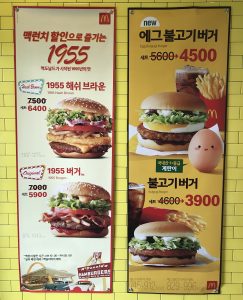
79. 맥날 (maengnal) – McDonald'south
This is just a shortened phrase for 맥도날드 (maekdonaldeu), which is the Korean way to say "McDonald'due south." Next time you see the gold arches sign, you tin can refer to information technology equally 맥날 (maengnal) to your friends!
lxxx. 얼빠 (eolppa) – Someone who is fatigued to good-looking people
From 얼굴에 빠지다 (eolgure ppajida), this term is used to depict a person who hands feels fatigued to someone handsome or pretty.
81. 근자감 (geunjagam) – Unfounded self-esteem
This term comes from the expression 근거 없는 자신감 (geungeo eomneun jasingam) which literally ways "self-esteem/conviction without grounds." Information technology is when someone has a huge ego or confidence about something but they really shouldn't!
82. 드립 치다 (deurip chida) – To make a joke
From "ad lib" (애드립 | aedeurip), this verb means "to make a joke" or "to brand an cool comment."
Can't read Korean yet? Click here to larn for gratuitous in almost 60 minutes!
Cool Korean Words and Expressions
Hither are the absurd Korean slang expressions and words that have stood the test of time and are notwithstanding in utilise today.
83. 내가 쏠게 (naega ssolge) – I'll pay | treat

From the verb 쏘다 (ssoda), which means "to shoot (a gun | pointer etc.)", the Korean slang expression 내가 쏠게 (naega ssolge) means "I'll pay". Y'all tin say this at the end of a engagement if you want to impress your companion and accept intendance of the cheque.
You could too use information technology at a bar with your Korean friends. If yous are a 구두쇠 (gudusoe | miser: literally "iron shoes") then you might not want to learn this expression.
84. 일차 (ilcha) , 이차 (icha) , 삼차 (samcha) – Stage 1, stage 2, stage 3
A typical night out with Korean friends, or a visitor dinner (회식 | hoesik), can be separated into stages chosen 차 (cha). The starting time stage, 일차 (ilcha), involves a meal with some drinks to get with it. The 2nd stage, 이차 (icha), often means going to a bar to continue drinking. The third stage, 삼차 (samcha), might involve going to a noraebang.
Although what each particular stage of the nighttime consists of will depend on the item people who are out that night. In that location may even exist a 4차 (sacha) or 5차 (ocha) involving more food or beer and noodles outside a convenience store.
When it is time to move to the next phase y'all might hear your Korean friends or coworkers say something like 2차 갑시다 ( icha gapsida) or 2차 가자 (icha gaja | permit's go to stage 2). If you are on a company dinner then these gaps between stages offer a good opportunity to make your excuses and go home or to a different bar abroad from your dominate.
85. 짱 (jjang)! – Neat or amazing
This sound consequence means "not bad" or "amazing". You tin simply say it on its own, without putting it into a sentence. It is also sometimes used in order to make other slang words. A common ane of these is 얼짱 (eoljjang), which ways peachy or amazing face [the 얼 (eol) comes from the give-and-take 얼굴 (eolgul)]. You can also say 몸짱 (momjjang) to draw somebody with an astonishing body.
86. 얼짱 (eoljjang) – A adept-looking person
When someone is really proficient-looking, you can employ 얼짱 (eoljjang) to describe them! It'due south a combination of 얼굴 (eolgul | face) and 짱 (jjang | another slang give-and-take meaning "great" or "the best").
87. 몸짱 (momjjang) – A hot trunk
This Korean slang term tin can be used to describe someone with a great body, like a guy who is quite fit and muscular or a girl who has a cracking figure! It is a combination of the word for "body" (몸 | mom) and 짱 | jjang which means "great" or "the best."
88. 간지 난다 (ganji nanda) – Not bad, fashionable, crawly
This Korean slang expression comes from the Japanese word for 느낌 (neukkim | feelings) so literally means "feeling is coming out."
The phrase 간지 난다 (ganji nanda) means great, stylish, awesome, or 멋있다 (meositda). This phrase tin can be used to depict fashion, food, appearance, compages, or even a expert football move. It is quite a new slang word and can be used in virtually situations as a replacement for the rather cheesy word 대박 (daebak). You might have been curious nearly what ganji means in Korean from Chiliad-pop artist PSY's music video with Jessi.
The reverse of this is 간지 안나 (ganji anna) which can exist used jokingly to say something is awful. If you desire to say somebody (such as a celebrity) is fashionable, you can say 간지남 (ganjinam | for guys) or 간지녀 (ganjinyeo | for ladies).
89. 폭탄 (poktan) – Bomb or something that is terrible
The Korean slang word 폭탄 (poktan) literally means "flop". It is used to draw something that is terrible, such as a work that you have really messed up. It can also be used to depict a really really ugly person.
Some other fashion to utilize 폭탄 (poktan) is by adding a 주 (ju) at the cease to make 폭탄주 (poktanju). This is basically a cocktail of whatsoever random booze your friend managed to detect and mix together. It is frequently a mix of beer, soju, whisky, possibly some vodka, and another things. Sentry out: Information technology's chosen 폭탄주 (poktanju) because it is dangerous like a flop!
xc. 왕따 (wangtta) – Outcast
You don't desire to be the 왕따 (wangtta)!
This Korean slang discussion describes a person who has no friends and is bullied by everybody at school. They have to sit on their own because nobody wants to sit down near them or be associated with them in any way at all. The bullying is often justified by proverb "We did it because he/she is 왕따 (wangtta)," every bit if being 왕따 (wangtta) ways that you are denied homo rights.
Near every loftier-school drama in Korea will involve a 왕따 (wangtta) at some point in the storyline so listen out for the word. Unfortunately, despite teachers' efforts to stop bullying, the phenomenon of 왕따 (wangtta) exists in the real globe too.
91. 뻥치지 마 (ppeongchiji ma) ! – Don't lie
This Korean slang expression means "don't tell a lie".
뻥 (ppeong) means "lie".
뻥을 치다 (ppeongeul chida) is the expression you use to express the thought of "telling a lie".
The suffix -지 마 (ji ma) is the informal version of -지 마세요 (ji maseyo) which means "don't."
You should only use this expression with Korean friends who you lot are shut with, peculiarly if the lie they are telling isn't particularly serious. An example of this would be friend claiming that they can drinkable ten bottles of soju when yous know that they tin can't handle their booze. 뻥 치지마 (ppeongchijima)!
In situations where y'all're not with close friends, y'all should apply 거짓말하지 마세요 (geojinmalhaji maseyo) instead.
92. 바람둥이 (baramdungi) – Histrion
A 바람둥이 (baramdungi) is a playboy who isn't looking for a serious human relationship, and may even exist seeing multiple people at the aforementioned time. He volition be gone as quickly every bit the air current (바람 | baram).
Girls will oftentimes tell their boyfriends not to be a 바람둥이 (baramdungi), although the word tin can exist used to depict playgirls too.
A like use of the word 바람 (baram) is the phrase 바람 맞았어요 (baram majasseoyo) which means "to be stood up". A 바람둥이 (baramdungi) isn't fully in a relationship however. If somebody is in a human relationship merely they are cheating on their partner and so y'all can use the word 양다리 (yangdari | meaning both-legs) which is the Korean slang for "2-timing."
93. 꽝 (kkwang) | 꽝이다 (kkwangida) – Wrong | you lose
This word comes from the sound 꽝 (kkwang) which is like a banging or bashing kind of audio. It basically means "incorrect" or "yous lose."
Game shows in Korea oft have some kind of ladder game (사다리 게임 | sadari geim) to decide what prize the contestants win (it is sometimes also played past friends or coworkers to decide who pays for lunch). If you lot get 꽝 (kkwang) information technology ways you lot don't win any prize.
The 꽝 (kkwang) sound is often accompanied by the tune from the drama "underground garden" to further mock the losing contestant.
94. 놈 (nom) – Homo or person
In the Korean movie "좋은놈, 나쁜놈, 이상한놈 (joeunnom, nappeunnom, isanghannom)", the "nom" (놈 | nom) in this title means "man" or "person." It is used every bit a suffix such as 미친놈 (michinnom | crazy person), or like the iii examples in the picture show title.
Information technology usually has negative connotations, and you should but use it with really close friends who have a good sense of humor. In fact, in general, yous should remember that the Korean language is very hierarchical and you can only really use Korean slang with close friends. Whatever yous do, don't use it to introduce yourself to your partner'southward parents for the beginning time, unless y'all similar getting dumped!
95. 공주병 (gongjubyeong) – Princess disease
This literally means "princess disease" (the male person equivalent is "prince disease" or 왕자병 (wangjabyeong). This is when somebody is interim like a spoiled petty princess and constantly seeking attention and wanting their partner to purchase them things.
As this word comes from hanja (Korean based on Chinese Characters), it has a similar sounding equivalent in Cantonese. This amusing video explaining the Cantonese equivalent explains the concept of 공주병 (gongjubyeong) quite well.
96. 붕어빵 (bungeoppang) – 2 people that look or act the aforementioned
This can be used to suggest that two people wait or act the same. It comes from the name of the bean-paste-filled pastries that resemble fish that you can buy from roadside stalls in winter.
The pastries are made using a press and so they always look the same and are also the same on both sides, which is where this expression comes from.
97. 방콕 (bangkok) – Stay in your room
This Korean slang expression means "to stay in your room", and is used when somebody is then tired or worn out that they programme to stay in their room all weekend or all vacation. If somebody uses this word to describe their vacation, don't get confused and think that they are going to Thailand.
98. 알바 (alba) – A part-fourth dimension task
This is a shortened phrase and comes from아르바이트 (areubaiteu), which ways "part-time job" in Korean. The discussion originally comes from the German word "arbeit", pregnant "work or labor."
Bonus circular: You tin add together 생 at the finish of 알바 (alba) to make 알바생 (albasaeng). This refers to someone who is studying at school and besides working role fourth dimension. The 생 (saeng) comes from the word 학생 (haksaeng), which means "pupil".
You frequently see 알바생 (albasaeng) at 편의점 (pyeonuijeom | convenience stores), 피씨방 (pissibang | Internet cafe), and 카페 (kape | cafe) etc. Look out for those 알바생 (albasaeng) the next time you're nearby a 대학교 (daehakgyo | academy)!
99. 소맥 (somaek) – Soju + beer
Two of the most popular alcoholic drinks in Korea are (you guessed it) – soju and beer! What do yous get when you mix the ii in your glass? Why 소맥 (somaek) of course (소주 + 맥주 = 소맥 | soju + maekju = somaek). Thanks!
100. 눈팅 (nunting) – Looking only, no chatting
You tin use this word to describe chatting with your eyes and not speaking, or reading posts or forum threads and not leaving a comment or a trace of yous being at that place!
눈팅 (nunting) is the combination of the words "heart" + "(chatting)ting", originally started in an online chatting room, to call people who just listen to other people's conversations but they're not saying anything. So 눈팅하다 (nuntinghada) literally ways to conversation with optics.
At present, the bigger meaning is that they only look and do not exercise things like posting or leaving a comment. These people are called 눈팅족 (nuntingjok), with 족 (jok) pregnant "tribe." Although the meaning is slightly different, 유령회원 (yuryeonghoewon | ghost member) is also used for those who clearly exist only are invisible in the online customs.
Next time you grab someone 눈팅 (nunting), encourage them to get in the conversation!
101. 당근 (danggeun) – Of form
This give-and-take, which literally means "carrot," is used to mean "of course" because it sounds similar to the give-and-take for "당연하지 (dangyeonhaji)?" You can say "당근이지 (danggeuniji)?"
Hopefully, you enjoyed this commodity and you have an easy way to acquire Korean slang. There are many other slang words and expressions out there, and the listing is changing all the time.
If y'all desire to stay up-to-appointment with new expressions then you lot can try using Naver's open dictionary (search for "오픈사전 | opeunsajeon)" to learn some new words such as 셀카봉 (selkabong | selfie-stick) or 랜선여친 (raenseonyeochin | online girlfriend – from the word for LAN cablevision). Information technology's one of the Korean dictionaries we recommend on this listing.
Now that you've learned a handful of Korean slang, utilise these words to get a deeper understanding of the language, and to make Korean learning even more fun!
And speaking of fun, here are some excellent resources you can use when talking in Korean:
- https://www.90daykorean.com/korean-name/
- https://www.90daykorean.com/introduce-yourself-in-korean/
For a structured Korean course, check out the 90 Twenty-four hour period Korean Membership program. You'll exist having three-minute conversations in Korean in just 90 days!
What are the best slang words that you take come across while learning Korean? Allow united states know in the comments below!
Photo Credit: Bigstock.com
Source: https://www.90daykorean.com/korean-slang/
0 Response to "How To Say Bruh In Korean"
Post a Comment